Radon Testing for Homebuyers: What Fostoria and Seneca County Buyers Should Know
By Joseph Kelley · November 10, 2026 · 4 min read
Why Radon Deserves a Spot on Your Homebuying Checklist
If you're buying a home in Fostoria, Seneca County, or anywhere across Hancock, Wood, Sandusky, Erie, Ottawa, Fulton, Putnam, Allen, Wyandot, or Knox County, radon is one of those topics that comes up quietly — and then matters a great deal. Radon is a naturally occurring radioactive gas that forms as uranium breaks down in soil, rock, and water. It's colorless, odorless, and tasteless, which is exactly why testing is the only way to know whether it's present at elevated levels in a home.
Because radon comes from the ground, it can seep into any home — new or old, basement or slab-on-grade, tightly sealed or drafty. The U.S. EPA and the Ohio Department of Health both recommend testing every home, and testing during your inspection period is one of the simplest steps you can take as a buyer.
Why Radon Matters in Northwest Ohio
Radon levels vary from neighborhood to neighborhood and even house to house. Two homes on the same street can test very differently depending on soil composition, foundation type, and how the home is ventilated. That's why "my neighbor tested fine" isn't a reliable answer for your specific property.
In our part of Ohio, radon is common enough that it's worth treating testing as standard due diligence rather than an optional add-on. If you're purchasing a home in Findlay, Tiffin, Bowling Green, Fremont, Sandusky, or a rural property out in the surrounding townships, a radon test gives you real information instead of guesswork.
How Radon Testing Works
A radon test measures the concentration of radon gas in the air, usually expressed in picocuries per liter (pCi/L). There are two common approaches:
- Short-term tests typically run anywhere from a couple of days to about a week. They're the most common choice during a real estate transaction because they fit within a typical inspection contingency window.
- Long-term tests run for several months and give a more representative picture of average exposure over time. These are often used by current homeowners who want a fuller picture.
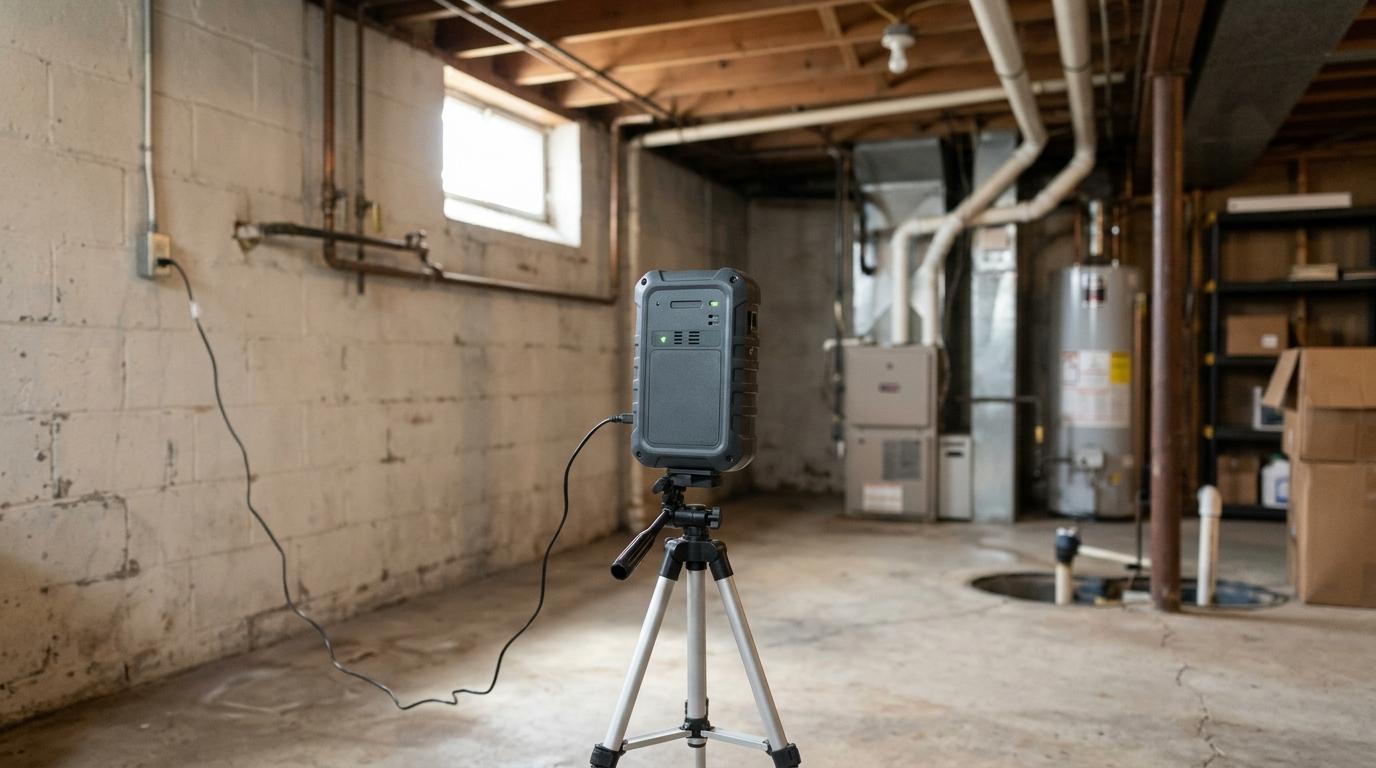
For a real estate transaction, a short-term test is usually the practical choice. Test devices are placed in the lowest livable level of the home — often a basement or ground-floor living area — and left undisturbed for the duration of the test. Closed-house conditions are generally required, meaning windows and doors stay closed except for normal entry and exit.
When the test is complete, the device is retrieved and analyzed, and you receive a result in pCi/L.
What the Numbers Mean
Radon results are typically compared against the EPA's action level of 4.0 pCi/L. A few general points:
- At or above 4.0 pCi/L: The EPA recommends taking action to reduce radon levels.
- Between 2.0 and 4.0 pCi/L: The EPA suggests considering mitigation, since no level of radon exposure is considered completely risk-free.
- Below 2.0 pCi/L: Levels are relatively low, though retesting periodically is still a reasonable habit.
These are general guidelines, not medical advice. If you have health-related questions about radon exposure, a qualified healthcare professional is the right person to ask.
Handling Radon Results During Your Purchase
If a test comes back elevated, it's not automatically a dealbreaker — it's information. Radon mitigation systems are a well-established industry, and many homes in our region have them installed.
As a buyer, your options typically include:
- Asking the seller to install a mitigation system before closing
- Negotiating a credit so you can arrange mitigation after closing
- Proceeding with the purchase and addressing it yourself
Your real estate agent can help you decide what's reasonable to request. From an inspection standpoint, our job is to give you clear, accurate test results so you can make an informed decision.
A Note on Water and Radon
Radon can also be present in well water, though the primary exposure route is breathing indoor air. If your prospective home has a private well, water testing is a separate but related conversation. We offer several water testing packages — including basic E. coli and coliform tests, expanded panels with nitrites and nitrates, and options that include lead or another metal — so you can get a fuller picture of what's coming out of the tap.
Radon Testing as Part of Your Inspection
Kelley Property Inspections offers radon testing alongside our full range of services for buyers across Fostoria and the surrounding counties, including single family, duplex, triplex, and four-unit properties, manufactured homes, and commercial buildings. Radon testing pairs naturally with a general home inspection, mold testing, sewer scope video, and water testing — so you can bundle the important checks into one coordinated visit.
If you're in your inspection window and want to know where radon stands in the home you're buying, reach out and we'll walk you through scheduling. A test takes a little time, but the information lasts a lot longer.